Short answer: I have lived in Paraguay for four years and the short version is that life is good, cheap and less frictional than a European expects, in exchange for accepting three things: real heat from December to March, healthcare you have to buy privately, and a small country far from everything except Madrid, which has a direct flight. One person at a European standard spends $1,200–2,000 a month in Asunción, rent included; a family with one child at an international school, $2,700–5,000. Spanish is spoken everywhere, people are kind, safety is among the best in Latin America and the taxes are what they are. This guide is the practical side: where to live, what it costs, how healthcare and schools work, and what nobody puts in the brochure.
What it costs to live in Asunción
The table above is the budget I see in clients and in my own home, as of September 2026, with the guaraní stronger than usual (about 6,150 to the dollar). Three ideas for reading it properly.
Local is cheap: fruit, vegetables, beef (Paraguay is a cattle exporter and it shows), domestic help, neighbourhood restaurants, transport, electricity from Itaipú. Imported is expensive: olive oil, European wine, cosmetics, electronics and cars carry tariffs and river logistics. A European who eats as at home spends more than expected; one who adapts to the local market, much less.
Housing is the dividing line. In the upper part of Asunción (Villa Morra, Recoleta, Carmelitas, Las Lomas, Ycuá Satí) there are furnished new builds with pool and gym at $500–900 for one bedroom and $900–1,800 for two or three; in gated communities in Luque or Mariano Roque Alonso, houses with gardens for the same. Outside that zone, half. Leases ask for a deposit and often a local guarantor; with a cédula and bank statements you negotiate.
Healthcare is absent from cost-of-living indices and is the item that surprises most: $60–150 per adult per month for a decent prepaga, which is not optional.
Where expats live in Paraguay
Asunción, upper part. Villa Morra and Recoleta concentrate restaurants, offices, malls and most expats; Carmelitas and Las Lomas are more residential; Mburucuyá and the Aviadores del Chaco axis, new towers and offices. This is where people who work from home and want to walk to dinner live. The historic centre, with the Palacio de López and the Pantheon, is handsome by day and run-down at night: you visit it, you do not live in it.
Luque and the airport corridor. Gated communities, houses with gardens, Ñu Guasu park for running and Silvio Pettirossi airport ten minutes away. For families with a car who want space.
San Bernardino and Areguá. Lake Ypacaraí, 45 minutes from Asunción. San Bernardino is the capital’s summer resort and, off-season, a quiet town of weekend houses; Areguá, a town of craftspeople and strawberries. For those who want to live outside the city without giving it up.
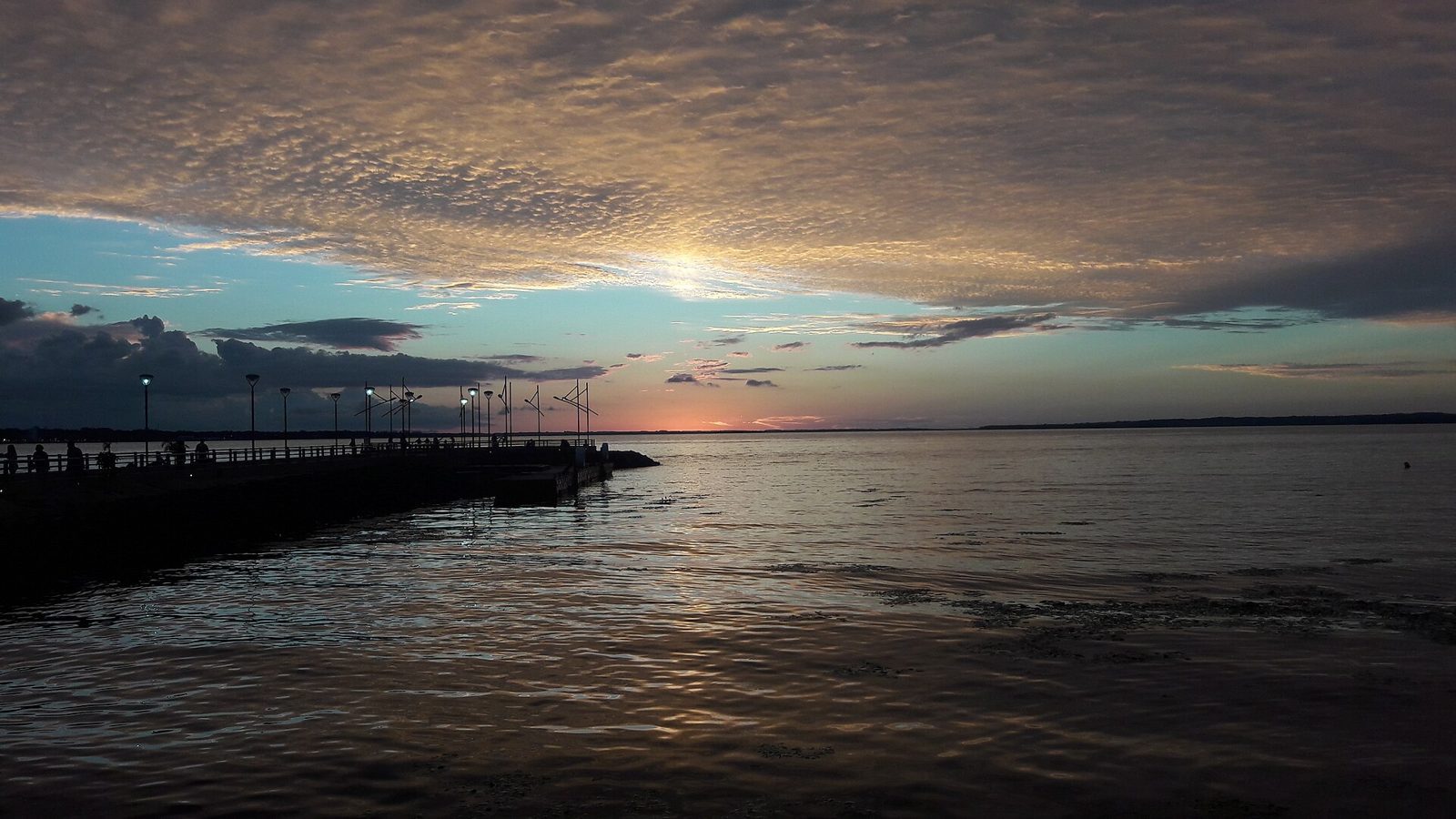
Encarnación. In the south, facing Posadas (Argentina), with a riverfront promenade, a river beach, the Jesuit ruins of Trinidad and a university. The most pleasant city in the country for human-scale living, clearly cheaper than Asunción, with a bridge to Argentina for the weekend.
Ciudad del Este. Border with Brazil and Foz do Iguaçu, commerce, Itaipú and the falls half an hour away. A business city, not a quiet-residence city; I know expats who live there for their company, not by choice of lifestyle.
Healthcare: the piece to solve before you land
Paraguayan public healthcare is not an option for an expat: crowded hospitals, waiting lists and uneven equipment. The IPS (social security institute) covers those contributing as employees, not someone living off an LLC. What everyone does is take out a prepaga, the private health plan, which gives access to Asunción’s private clinics: good for consultations, emergencies, births and routine surgery, with doctors often trained in Argentina, Brazil or Spain. $60–150 per adult depending on age and cover; more with pre-existing conditions, which many prepagas exclude or defer.
For serious cases (complex oncology, high-end cardiac surgery), many fly to Buenos Aires, São Paulo or Madrid. If your situation warrants it, international cover with evacuation costs more and covers that. And a detail for anyone leaving a public system: once you cease to be resident at home you usually lose public cover, and bilateral social security agreements (Spain’s with Paraguay dates from 1998) cover pensions and contribution periods, not healthcare in Paraguay.
Schools and family
Asunción has bilingual and international schools on American, German, French and Italian curricula and International Baccalaureate programmes, with monthly fees of $300–1,200 and entry fees that can be steep. Studies completed in Paraguay are recognised abroad through the usual apostille of the education ministry’s certificates.
The school year runs February to November, with summer holidays in December and January: if you move with children, aim for a February arrival. Family life is easy: parks, clubs with pools, birthdays, and a culture where children are everywhere. Visiting grandparents stay longer than planned.
Safety, with numbers
Paraguay closed 2025 with 6.1 homicides per 100,000 inhabitants (391 cases), 18% down on the two previous years, among the three countries with the lowest rate in Latin America alongside Argentina and Chile. Western Europe is below 1, so this is not Europe; but it is not what a European imagines of South America either. In the upper part of Asunción and in the gated communities, life is quiet.
What to internalise: motochorros (motorbike snatch thefts) in Asunción, phone put away in the street, car doors locked at traffic lights, neighbourhoods not walked at night (Chacarita, parts of the centre) and caution in the border zones and on the Chaco highway. Property crime exists; violence against the ordinary foreigner is rare.
The heat, the dengue and other things not in the brochure
Heat. December to March, 35–40 °C with humidity. Everything has air conditioning and the electricity bill shows it. Winter (June to August) is mild, with the odd week of damp cold that houses, with no heating or insulation, handle badly. Summer storms take the power out for a few hours; a flat in a tower with a generator avoids it.
Dengue. There are serious seasonal outbreaks, mostly in summer. Repellent, mosquito nets and not leaving standing water are habits, not brochure advice.
Pace. Paperwork takes time, things get done “now” which may mean tomorrow, and punctuality is flexible. Anyone arriving from Berlin suffers it for the first months and is grateful for it afterwards. Sundays the city stops; the asado and tereré are institutions.
Distance. Paraguay is landlocked and the only direct flight to Europe is Madrid. Everything else connects through São Paulo, Buenos Aires, Lima or Panama. For a nomad who needs to move around the world a lot, it is a real drawback.
Language. Spanish everywhere, with Guaraní as the second official language and Jopará (the mix) in the street. Little English outside business circles: if you do not speak Spanish, you will learn it fast or struggle.
Not sure how this applies to your case?
Eleven questions and we tell you whether the LLC fits, and if it does not, that too.
Logistics: flights, time zone, consulate
Flights. Air Europa flies Madrid–Asunción non-stop, about 11 hours 40 minutes, four to seven times a week depending on season, with return fares around €700 in low season. From elsewhere in Europe or from North America, you connect through Madrid, São Paulo, Buenos Aires, Lima or Panama City.
Time zone. Paraguay has been on UTC-3 all year since 2024, so the gap with Spain is four hours in European winter and five in summer; one to two hours from New York, three to four from London. Working with European clients is comfortable: your morning is their afternoon and your afternoons are meeting-free.
Consulate. Your embassy in Asunción handles consular registration as a resident, which, beyond services (passport renewal, voting), is one of the acts documenting your departure from home. For Spanish nationals, that registration plus deregistration from the municipal roll and form 030 are the paper trail; see Paraguay residency from Spain.
Money. The guaraní is the currency; foreign cards work almost everywhere in Asunción and charge fees; with a cédula you open a local account and bring money by transfer or through platforms. Many leases and large purchases are agreed in dollars.
Day to day: bank, car, internet, paperwork
Cédula first. It is the key to everything: bank account, lease in your name, municipal driving licence (your home licence supports the application), a phone contract, the prepaga. Until you have it, you live on a foreign card and short-term rental. The step-by-step is in requirements, fees and timelines.
Car. You need one. Public transport is poor and the city is built for cars; Bolt and Uber work well and cheaply for daily life without one. New cars are expensive because of tariffs; the used market is large.
Internet. Fibre in Asunción and the main cities, $20–40 a month for speeds more than enough for remote work. Mobile coverage is good in cities and patchy inland.
Paperwork. A RUC at the DNIT if you will invoice anything here (not required if you only have foreign income, as explained in tax residency in Paraguay), and a local accountant who is inexpensive and knows foreigners. Bureaucracy is slow but predictable; with an agent and patience, it gets done.
How we do it at Cheq
We are not an estate agent or a relocation company: we design your residency, your LLC and your banking so they fit, and with our of-counsel legal partners in Asunción we walk you through the file. But I have been here four years and I know who rents, who insures and who teaches, and that gets shared on the viability call too.
In short
- $1,200–2,000 a month for one; $2,700–5,000 for a family with an international school.
- Villa Morra and Recoleta to live on foot; Luque and the gated communities for families; Encarnación for human scale; the lake to leave the city.
- Prepaga from month one; for serious cases, Buenos Aires, São Paulo or Madrid.
- Safety among the best in the region (6.1 per 100,000), with new habits.
- Heat, dengue, a slow pace and a single direct flight to Europe: what you accept.
Explore the full guide
Frequently asked questions
Can you live in Paraguay on $1,000 a month?
You can, and many Paraguayans live on much less. At a European standard in Asunción (new-build flat in the upper part of town, private health cover, a car, eating out) the realistic budget for one person is $1,200–2,000. Outside Asunción, or in districts like Luque or Lambaré, the figure drops a lot.
Is Paraguay safe?
By Latin American standards, yes: 6.1 homicides per 100,000 in 2025, among the three lowest in the region. By Western European standards you change habits: motorbike snatch thefts in Asunción, neighbourhoods avoided at night, car doors locked, caution at the borders. The districts where expats live are quiet.
What is healthcare like?
Public healthcare is poor and the IPS social security system covers only those contributing as employees. An expat takes out a prepaga (private health plan) from month one, which gives access to Asunción's private clinics, good for routine care. For complex surgery or oncology, many go to Buenos Aires, São Paulo or Madrid; consider international cover if your situation warrants it.
Are there international schools?
Asunción has bilingual and international schools on American, German, French and International Baccalaureate curricula, with monthly fees of $300–1,200. The school year runs February to November, so plan a move with children for a February arrival.
How hot does it get?
Hot. December to March, 35–40 °C with humidity, and air conditioning everywhere. Winter (June to August) is mild, with the odd week of damp cold that houses are not built for. And there is a dengue season: mosquito nets and repellent are part of life.
Can I keep my life at home and live in Paraguay "part-time"?
Migration-wise, temporary residency tolerates up to a year away and permanent up to three. Tax-wise, no: if your permanent home and family stay where they are, your home country keeps you (and for Spain the 2024 treaty settles it), and since July 2026 conversion to permanent requires real activity. Paraguay works if you move; it does not work as a second residence with a cédula.