A US LLC When You Live in Georgia: The 1% Regime and When the LLC Still Matters
Small Business Status already gives you one of the lowest personal tax rates in the world. A US LLC on top of it isn’t a tax move: it’s a market-access one, and only sometimes worth making.
Short answer: if you’re a Georgian tax resident registered under Small Business Status, you’re already paying roughly 1% on turnover up to the annual threshold: a rate a US LLC cannot legally improve on for work you actually perform while in Georgia. A US LLC’s value here is narrower and more specific: it gives you a US bank account, Stripe running as a standard US entity, and a counterparty that some enterprise clients require. Whether that’s worth the added structure depends entirely on who you sell to and what rails you need, not on tax rate. And there’s a myth to clear up before any of this: routing invoices through a US LLC does not make Georgian-source work become foreign income. If you did the work while physically in Georgia, Georgia’s tax authority treats it as Georgian-source regardless of which entity billed for it.
How Georgian residency and Small Business Status actually work
Georgian tax residency has two doors. The standard one is presence: 183 days or more in the country within any rolling 12-month period. The second is High Net Worth Individual (HNWI) status, which grants residency without any day requirement at all, based on verified property or several consecutive years of high income, alongside a smaller Georgian-income or residence-permit condition. The exact GEL/USD thresholds for HNWI status and the local-income requirement change periodically; confirm current figures with a Georgian tax advisor before relying on them for a decision.
Once you’re a tax resident, Small Business Status (SBS) is the mechanism most solo founders and consultants actually use. Registered as an individual entrepreneur with SBS, your gross turnover (not profit, turnover) is taxed at roughly 1% up to an annual ceiling, with income above that ceiling taxed at a higher marginal rate rather than disqualifying you outright. Confirm the current annual GEL threshold and the exact marginal rate on excess turnover with a Georgian accountant; these are set by regulation and adjusted from time to time.
That’s an aggressively low effective rate by any international standard. It is also, importantly, a personal, Georgian regime: tied to your registration as an individual entrepreneur with the Georgian tax authority, not to any foreign company you happen to also own.
The territorial system’s real boundary, and the myth it doesn’t support
Georgia’s income tax is genuinely territorial for individuals: residents are taxed on Georgian-source income, and most passive foreign-source income (foreign dividends, foreign interest, foreign capital gains) generally sits outside the Georgian tax base.
Here’s where it gets specific, and where the honest answer diverges sharply from what gets repeated in nomad forums: the territorial exemption is about the source of the income, not about which entity invoices for it. If you personally perform consulting, development or design work while physically present in Georgia, that income is Georgian-source, full stop, regardless of whether the client pays a Georgian bank account, a US LLC, or an offshore company. The Georgian Tax Code distinguishes between income received from a genuinely foreign source and remuneration for work performed inside Georgia, and it’s the second category that catches most digital founders.
“Invoice through a US LLC and pay 0% while living in Georgia” is the exact kind of claim we won’t make. It confuses two different things: where your income is legally sourced, which depends on where the work happens, and which entity happens to send the invoice, which doesn’t change that. If your labour happens in Tbilisi, Georgia has a claim on it: LLC or no LLC.
This isn’t a reason to avoid Georgia or SBS: quite the opposite. It’s a reason to register properly as an individual entrepreneur under SBS and let that 1% do the work it’s actually designed to do, rather than layering a US LLC on top in the mistaken belief that it lowers a rate that’s already close to the floor.
When SBS makes the LLC redundant
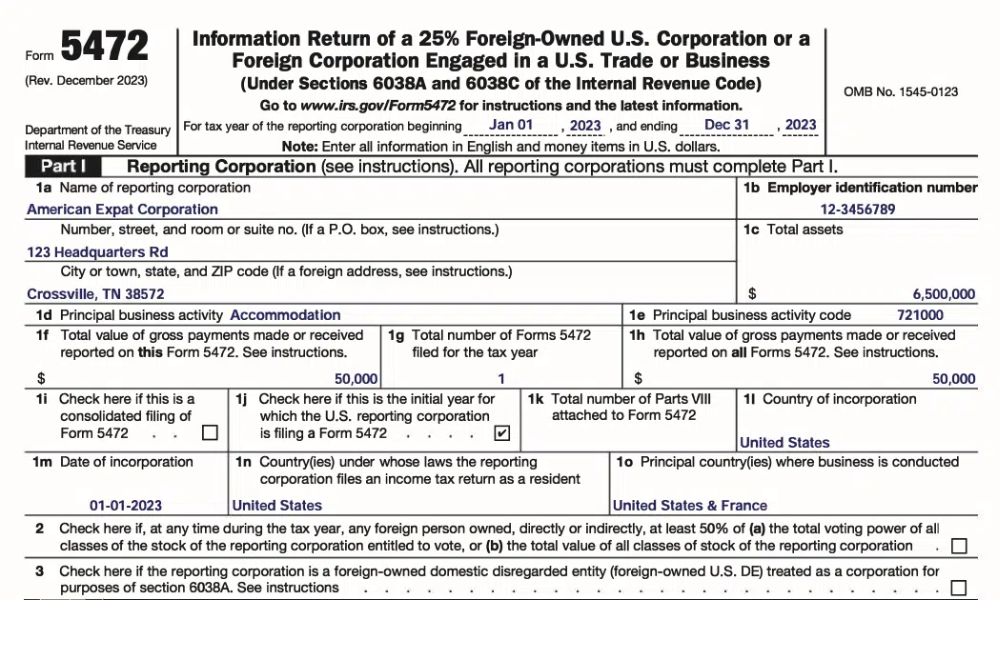
For a specific, common profile, a US LLC adds cost and compliance without adding anything real: a solo freelancer or consultant, registered under SBS, whose clients are comfortable paying a Georgian individual entrepreneur directly (by wire, by card, through a payment processor that already serves Georgia) and who has no need for a US-facing counterparty. In that case, the 1% regime is already close to the best tax outcome available anywhere, and the LLC would only add a second filing regime (Form 5472, a $25,000 penalty for missing it) without changing what you actually take home.
Not sure how this applies to your case?
Eleven questions and we tell you whether the LLC fits, and if it does not, that too.
When the two are genuinely complementary
The calculation changes once you need something SBS structurally cannot provide:
- A US bank account. SBS gives you a Georgian tax registration, not US banking rails. If clients expect ACH or wire into a US account, or you want to hold USD outside the Georgian banking system, a US LLC with a Mercury or Relay account solves that directly.
- Stripe as a standard US entity. Some payment processing setups run more cleanly through a US LLC than through a Georgian individual entrepreneur, particularly for SaaS or e-commerce with US-based customers.
- An enterprise client that requires a US counterparty. Some US companies’ procurement and legal teams simply won’t contract with a foreign individual entrepreneur, but will sign with a US LLC without hesitation.
- Diversifying beyond a single-country regime. SBS is a strong deal today; regimes change. Some founders want a structural layer that doesn’t depend entirely on one country’s small-business rules staying exactly as they are.
In each of these cases, the LLC isn’t reducing your tax rate (SBS is already doing that); it’s solving an access problem SBS was never built to solve. That’s the honest frame: complementary, not competing, and worth it only when one of those specific needs actually exists for you.
| SBS alone | SBS + US LLC | |
|---|---|---|
| Tax rate on Georgian-source work | ~1% up to threshold | Unchanged: the LLC doesn’t lower it |
| US bank account | Not provided | Buildable file for fintech and traditional banks |
| Stripe as a US entity | Not applicable | Available |
| Enterprise clients requiring a US counterparty | May be a blocker | Solved |
| Added compliance | Georgian IE filings only | + annual Form 5472 in the US |
| Best fit | Clients comfortable paying a Georgian IE directly | Clients or platforms that need a US-facing entity |
What the US side looks like regardless of Georgia
None of the US mechanics change based on where you live. A foreign-owned single-member LLC is a disregarded entity for US federal tax purposes: no US federal income tax without effectively connected income or a physical US presence, but Form 5472 with a pro-forma 1120 is required every year regardless of activity, and missing it carries a $25,000 penalty. States like Wyoming or New Mexico charge no state income tax on an LLC with no in-state activity. That side of the equation is the same whether you’re in Tbilisi, Batumi, or anywhere else: what changes with Georgia is purely the personal tax layer on top.
Where we draw the honest line: the specific interaction between SBS registration, Georgian source rules, and income earned through a foreign LLC is a genuinely Georgian tax law question: not something we’ll estimate from outside. We work with Georgian accountants on that analysis and coordinate it with the US structure, rather than presenting round numbers we can’t verify as fact.
Getting the sequence right
For most founders in Georgia, the sensible order is: register for Georgian tax residency and SBS properly first, since that’s very likely your single biggest tax lever regardless of anything else you do. Then decide whether a US LLC solves a genuine access problem (banking, Stripe, an enterprise contract) rather than building it on the assumption that it lowers a rate SBS has already brought close to the floor. If you’re weighing the US side of that decision, US LLC tax for non-residents covers the federal mechanics, and US banking explains what fintechs and traditional banks actually check before approving an account. If you already have an LLC formed elsewhere and want to know whether it’s set up correctly, switching your LLC is where that review starts.
In short
Small Business Status is one of the best personal tax deals available to a solo founder anywhere in the world, and a US LLC does not improve on it for work performed inside Georgia: that claim doesn’t survive contact with how Georgia actually sources income. Where the LLC earns its place is narrower: US banking, Stripe as a standard US entity, and enterprise clients that need a US counterparty. Whether that’s worth it depends on your specific client base, not on a tax rate you’ve already secured. If you want a straight read on whether your case needs it, that’s what the assessment is for.
Frequently asked questions
If I already have Small Business Status at 1%, why would I need a US LLC?
For plenty of founders (a solo consultant billing Georgian or nearby clients directly, with no need for US payment rails), you genuinely wouldn't. SBS on its own already gives you one of the lowest effective tax rates available anywhere. The LLC starts to matter when you need something SBS doesn't provide: a US bank account, Stripe running as a standard US entity, or a counterparty a US enterprise client will actually sign a contract with.
Does routing income through a US LLC let me avoid Georgian tax on it?
Not if you're doing the work while physically in Georgia. Georgia's territorial system exempts genuine foreign-source income (foreign dividends, foreign interest) but income from work actually performed while you're present in Georgia is Georgian-source, regardless of which entity invoices the client or where the money lands. Believing an LLC changes that is exactly the kind of '0% tax' shortcut that gets people into trouble; we won't sell it to you.
How do I become a Georgian tax resident?
Two routes. The standard one is being physically present in Georgia for 183 days or more in any rolling 12-month period. The other is High Net Worth Individual status, which grants tax residency without a day requirement, based on verified assets or several years of high income, plus a smaller Georgian-income or residence-permit threshold.
Confirm current HNWI thresholds and Georgian-income requirement with a Georgian advisor before relying on them; they are periodically adjusted.
What's the actual threshold for the 1% Small Business Status rate?
As registered, SBS taxes an individual entrepreneur's gross turnover at 1% up to a set annual ceiling, with the excess taxed at a higher marginal rate rather than losing the status entirely.
Confirm the current GEL threshold and the exact marginal rate on excess turnover with a Georgian accountant, as these figures are set by regulation and are adjusted periodically.
Do I still owe anything in the US if I have a US LLC and live in Georgia?
Yes, separately from anything Georgian. A foreign-owned single-member LLC is a disregarded entity for US federal tax purposes (no US federal income tax without effectively connected income or a physical US presence) but Form 5472 with a pro-forma 1120 must be filed every year regardless of activity. Missing it carries a $25,000 penalty. That obligation exists independently of your Georgian tax status.
Can Cheq Capital confirm exactly how my income will be taxed in Georgia?
No, and we won't pretend otherwise. Our expertise is the US side (formation, EIN, compliance, banking) and the interaction between Georgian source rules and Small Business Status is genuinely specific to Georgian tax law. We work with local partners on that analysis and coordinate it with your US structure rather than guessing at numbers we can't verify.