A US LLC When You Live in Panama: Territorial Tax, S.A. vs LLC, and Where You’ll Actually Bank
Panama already gave you the territorial tax system. What it hasn’t given you is Stripe, or a bank that doesn’t flag your country the moment you apply.
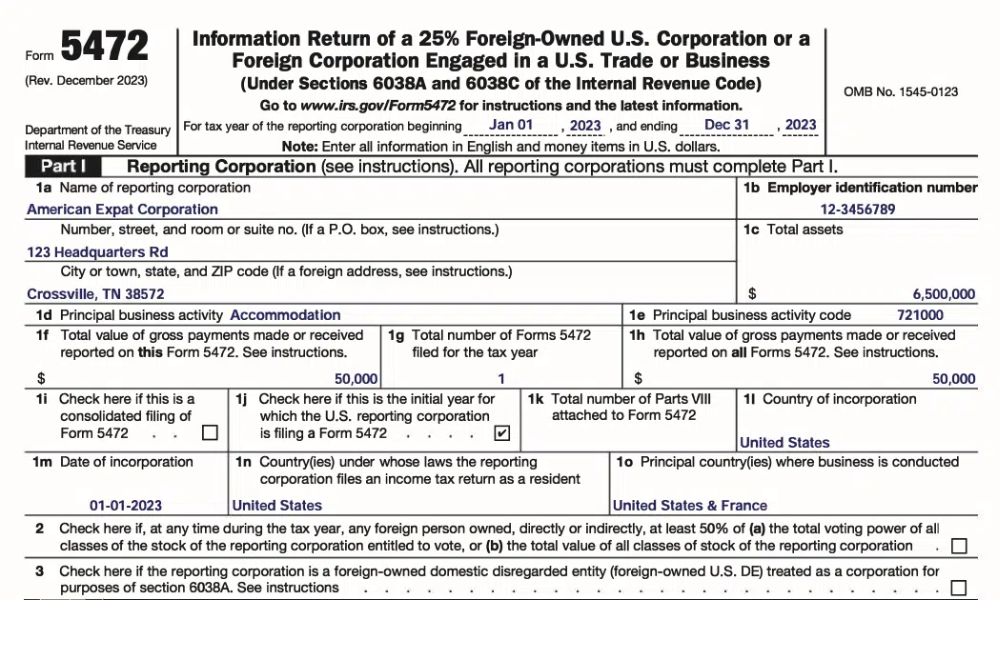
Short answer: if you’re resident in Panama, a US LLC isn’t primarily a tax play: under Panama’s territorial system (Código Fiscal, Art. 694), foreign-source income is generally outside the local tax base already. The LLC’s real job is market access: Stripe doesn’t operate for Panamanian entities, and Panama’s international banking reputation still carries friction that has little to do with any individual business. A foreign-owned LLC is a disregarded entity for US federal purposes: no US federal income tax without a physical US presence, but Form 5472 is mandatory every year regardless ($25,000 penalty if missed). Panama and the US have an information-exchange agreement, not a comprehensive tax treaty, which matters less than it sounds once you understand why: there’s usually nothing to double-tax. The honest caveat up front: Panama’s banking and reputational landscape moves fast, and the fine print of your specific case is something we validate with Panamanian counsel, not something either of us should guess at.
Panama’s territorial system, and where it stops
Article 694 of Panama’s Código Fiscal sets the rule: only income generated inside Panama is taxable there. A US LLC billing clients outside the country generally doesn’t create additional Panamanian tax exposure on that revenue. If some of your clients are Panamanian, that portion sits differently: it’s Panamanian-source, and it’s worth confirming with a local accountant how that slice is treated alongside your LLC’s foreign-source income.
That’s the tax side, and it’s genuinely favourable. It is also the smaller half of why founders in Panama reach for a US LLC in the first place. The bigger, more practical problem is what happens the moment you try to move money or accept a card payment as a Panamanian entity.
The problem territorial tax doesn’t solve: banking and market access
Panama’s international financial reputation took a real hit after the 2016 “Panama Papers” disclosures, on top of an already-contracting correspondent banking relationship: between 2014 and 2016, Panama’s banking sector lost more than 70 international correspondent lines as global banks pulled back from perceived compliance risk in the region. None of that reflects on any individual founder, but it shows up anyway, as extra scrutiny on transfers, longer KYC reviews, and outright account rejections that have nothing to do with the underlying business.
Stripe is the clearest, most concrete example: it simply doesn’t support Panamanian-registered businesses. If you sell digital products, run a SaaS, or process card payments online, that’s not friction: it’s a hard stop. PayPal works but with tighter limits and more frequent holds than a US-based account would see.
A US LLC changes what institutions and processors see when they look at your business. Stripe evaluates a US LLC like any other US entity: the fact that its owner lives in Panama doesn’t appear as a flag in the transaction. The same logic applies to opening a bank account: a US institution reviewing a US LLC’s file is running a different process than a Panamanian bank reviewing a Panamanian account holder navigating a post-2016 compliance environment.
S.A. panameña vs US LLC, different jobs, not competing options
| Panamanian S.A. | US LLC | |
|---|---|---|
| Formation | Notarised deed, Public Registry filing, mandatory resident agent | State filing, no notary required |
| Stripe access | Not supported | Supported as a standard US entity |
| US banking | Not applicable: this is a Panamanian entity | Buildable file for fintech and traditional banks |
| International perception | Carries residual scrutiny post-2016 | Reads as a standard US business |
| Best fit | Panamanian real estate, local assets, inheritance structuring | Invoicing international clients, holding USD, US-facing tools |
| Ongoing overhead | Resident agent fee, annual franchise tax | Registered agent fee, annual compliance (Form 5472) |
The S.A. isn’t a worse structure: it’s built for a different job. If you own property in Panama, run a locally-facing business, or need a vehicle for succession planning inside the country, the S.A. is still the right tool, and a US LLC doesn’t replace it. What the S.A. cannot do is get you Stripe or a US bank account; that gap is exactly what pushes most internationally-billing founders in Panama toward holding both structures rather than choosing one.
Not sure how this applies to your case?
Eleven questions and we tell you whether the LLC fits, and if it does not, that too.
Why residents end up banking in the US, not locally
This is the pattern we see repeatedly: a founder living in Panama, billing clients in the US or Europe, tries the Panamanian banking route first because it’s the obvious default, and runs into documentation requests, holds, or a flat decline that has more to do with the bank’s post-2016 risk appetite than anything about the business itself.
The fix isn’t fighting that reputational drag: it’s routing around it. A US LLC with an EIN, a coherent business description, and the right documentation applies to a US fintech (Mercury, Relay) or, later, a traditional bank as a standard US entity. The country of residence of the owner doesn’t drive the review the way it does when a Panamanian entity applies internationally. Most founders start with a fintech to become operational quickly, then consider a traditional US relationship once there’s a reason: travel to the US, an enterprise client requiring it, or a need for US credit history.
Tax treatment, and the honest limit of what we cover
Panama and the United States signed a Tax Information Exchange Agreement in 2010, in force since 2011: it lets each country request tax-relevant information from the other, but it is not a comprehensive income tax treaty and doesn’t include the double-tax relief mechanisms a full treaty would. In practice this matters less than it sounds: because Panama’s system is territorial, most founders billing internationally through a US LLC don’t have Panamanian tax on that income to begin with, so there’s rarely a double-tax problem to relieve.
On the US side, nothing changes because you live in Panama. A foreign-owned single-member LLC is a disregarded entity for US federal tax purposes: no US federal income tax without effectively connected income or a physical US presence, but Form 5472 with a pro-forma 1120 is required every year regardless of activity: a missed filing carries a $25,000 penalty.
Where we draw the honest line: the exact treatment of any Panamanian-source income mixed into your business, and how Panama’s tax authority (the DGI) views your specific structure, is a question for a Panamanian accountant. We work with local partners on that piece and coordinate it with the US structure, rather than pretending to be Panamanian tax specialists ourselves. If a claim about your specific numbers can’t be confirmed against a primary source, we say so instead of guessing.
A territorial tax system tells you what Panama won’t tax. It says nothing about whether Stripe will approve you or whether a bank will open your account without three rounds of extra documentation. Those are separate problems, and only one of them gets solved by a residency card.
What this actually looks like in practice
A founder running a design or consulting business from Panama City, billing US and European clients, typically hits the same wall: PayPal retention, no Stripe, and a local bank account that works for Panamanian transactions but adds friction the moment international wires start arriving regularly. Moving that invoicing through a US LLC with a US bank account removes the friction at the point clients actually pay: the money arrives as a standard US transaction, without carrying the residual scrutiny a Panamanian account faces. The S.A., if there is one, keeps doing what it was built for locally; it just stops being asked to do a job it was never designed for.
If you’re deciding what a US structure changes for your specific tax situation, US LLC tax for non-residents covers the federal mechanics in full, and US banking walks through what fintechs and traditional banks actually check before they say yes. If you’re weighing formation itself, start with US LLC formation for non-residents.
In short
Panama’s territorial system already does the tax work for foreign-source income: a US LLC doesn’t improve on that math. What it does is unlock Stripe, remove the residual scrutiny Panamanian entities carry internationally, and give you a US bank account that behaves like one. The S.A. panameña keeps its own job for anything genuinely local. And on the fine print specific to your Panamanian tax situation, we hand that to counsel on the ground rather than guess. If you want a straight read on whether that combination fits your case, that’s what the assessment is for.
Frequently asked questions
If Panama is already territorial, why would I need a US LLC?
Panama's territorial system (Código Fiscal, Art. 694) means foreign-source income generally isn't taxed locally: that part is genuinely favourable. What it doesn't solve is market access: Stripe does not operate for Panamanian entities, and Panama's banking sector has carried heightened scrutiny since the correspondent-banking contraction of the mid-2010s. A US LLC exists to solve that second problem, not to reduce a tax bill you may not have in the first place.
Is a US LLC better than a Panamanian S.A.?
They solve different problems. The S.A. is the right vehicle for Panamanian real estate, local assets or inheritance planning. It does not get you Stripe access or a US bank account, and it carries its own overhead: notarised incorporation, Public Registry filing, and a mandatory resident agent. The LLC is the right vehicle for invoicing international clients and holding dollars in a US institution. Many founders end up with both, for different jobs.
Does owning a US LLC create double taxation with Panama?
Panama and the US have a Tax Information Exchange Agreement (in force since 2011) but no comprehensive income tax treaty: there's no double-tax relief mechanism because, under Panama's territorial system, foreign-source profit generally isn't taxed in Panama to begin with. Where it gets specific to your case (client mix, any Panamanian-source revenue, how you're personally resident here) is exactly where we bring in a Panamanian accountant before you rely on it.
Do I still have US filing obligations if I have no US presence?
Yes. A foreign-owned single-member LLC is a disregarded entity for US federal tax purposes (no US federal income tax without effectively connected income or a physical US presence) but Form 5472 with a pro-forma 1120 is mandatory every year regardless of activity, and missing it carries a $25,000 penalty. That obligation exists independently of Panama's tax treatment.
Why do so many Panama residents end up banking in the US instead of locally?
Partly reputational drag that has nothing to do with any individual account holder, and partly practical: a US LLC with US banking gives you a routing number, ACH access and a counterparty that clients and payment processors recognise without extra questions. It isn't that Panamanian banking doesn't work: it's that a US-facing business usually needs US-facing rails.
Can you actually get me a US bank account from Panama?
Nobody can guarantee a bank account: that decision belongs to the institution, not to us or any provider claiming otherwise. What we control is the file: formation documents, EIN confirmation, an operating agreement that matches your actual business, and a business description that reads coherently to a compliance reviewer. We build that once, apply at the institution that fits your profile, and go again if the first one says no.