A US LLC for E-commerce and Dropshipping
Your customers are in the US, your processor keeps asking for documents you cannot produce, and someone told you an LLC means zero tax. Two of those three are real problems. The third is the expensive one.
E-commerce is the profile where the gap between what providers advertise and what owners actually owe is widest. The advertising says: form a US LLC, pay 0% tax, sell to Americans. The reality involves three separate tax systems that have nothing to do with each other, and confusing them is what turns a profitable store into a compliance clean-up.
Let us separate them properly, because almost every mistake we see in this category comes from mixing them up.
The rule that actually governs this: US federal income tax, US sales tax and your own country’s tax are three independent questions with three different triggers. Answering one of them does not answer the others, and “0% federal” is not the same sentence as “no obligations.”
The three systems, kept apart
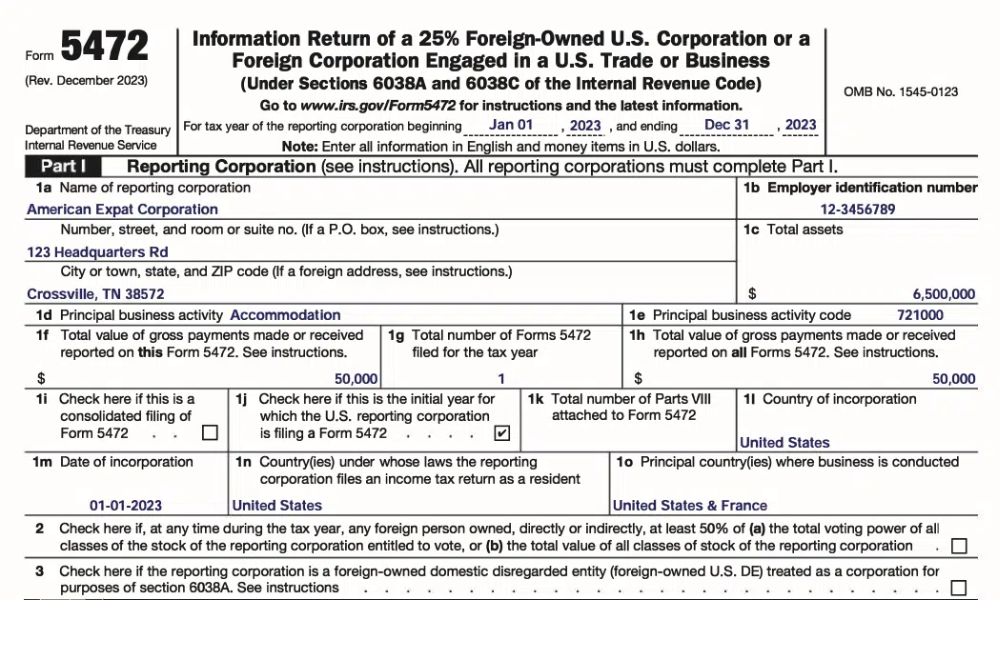
US federal income tax. The test is effectively connected income (whether you have a US trade or business), not whether your customers are American. Selling from outside the US, with no US office, employees, dependent agents or inventory, generally means no US federal income tax on the profit. It never means no filing: a foreign-owned single-member LLC files Form 5472 with a pro-forma 1120 every year, and the penalty for missing it is $25,000 regardless of how small the store is.
US sales tax. This is a state-level system with no relationship to the federal one. Since South Dakota v. Wayfair (2018), states can require out-of-state sellers to collect based on economic activity alone. Each state sets its own threshold. Marketplace facilitator rules mean Amazon-type platforms generally handle collection on their own marketplace: your own Shopify store does not get that treatment, because there you are the seller.
Your country’s tax. Wherever you are tax resident, that country’s rules for foreign income and foreign entities apply to the LLC’s profit. If it taxes worldwide income, the profit is taxable there. This is the number that usually matters most to your bank balance, and it is the one the “0% tax” marketing quietly omits. Tax for non-resident LLC owners covers the mechanics.
What the LLC genuinely does for a store
Payment infrastructure. Stripe and PayPal are built to onboard US entities with an EIN and a US business account. As a foreign individual you are the exception case; as a US entity you are the standard one. For stores that have been through processor limbo, this is usually the whole reason.
Supplier relationships. US suppliers and wholesalers frequently want an EIN and a resale certificate before they will trade with you on proper terms. Without an entity, you are buying retail from businesses that would happily sell you wholesale.
Customer trust and returns. A US-facing store operated by a US entity, with a US-format address and USD pricing, converts differently from one that presents as a foreign individual. We will not put a number on that, but store owners are consistent about the direction.
Separation of risk. E-commerce carries product liability, chargeback exposure and platform risk. An LLC operated as a genuine company (own account, own contracts, no personal-money mixing) puts a layer between that and your personal assets.
Not sure how this applies to your case?
Eleven questions and we tell you whether the LLC fits, and if it does not, that too.
The obligations nobody mentions at checkout
If you sell physical products into the US at any volume, plan for these:
- Annual federal filing: Form 5472 plus pro-forma 1120, no matter how small the year was.
- State-by-state sales tax nexus monitoring: thresholds are per-state and your exposure changes as you grow. This is an ongoing operational task, not a one-off registration.
- Resale certificates: if you buy for resale, the certificate paperwork with each supplier matters, especially in dropshipping where goods move without you touching them.
- Registered agent and state filings: annual, in the state of formation and anywhere you register.
- Bookkeeping that can substantiate related-party transactions: the 5472 reports transactions between you and your own company, which means those transactions need to be recorded properly.
If you hold inventory in the US, add a further layer: physical presence in a state creates nexus there directly, and inventory is one of the routes by which a foreign-owned LLC can acquire genuine US activity for federal purposes too. That case has its own page: see a US LLC for Amazon FBA.
When we tell store owners to wait
Pre-revenue stores. If you have not made your first sale, the LLC is a cost with no offsetting benefit. Validate the store, then structure it. We have talked people out of forming at this stage more often than at any other.
All-domestic stores. If you sell exclusively to customers in the country where you live, a US entity adds a foreign structure and foreign filings for benefits your customer base cannot use.
Stores under roughly $20,000–25,000 a year in revenue. The fixed annual cost of a US structure is real. Below that band it is difficult to justify unless you have a specific, nameable problem (a processor that will not onboard you, a supplier that requires an EIN) that the entity actually solves.
The assessment asks about your activity, your inventory, your customers and where you live, and gives you the full reasoning on screen. When the answer is “not yet,” it says so and tells you the threshold at which to revisit.
Marketplace-led or store-led: the choice that shapes everything else
Before the structure question, there is a commercial one that determines how much structure you need.
Marketplace-led means most of your volume runs through Amazon, Etsy, eBay or similar. The marketplace owns the customer relationship, handles most of the sales tax collection under facilitator rules, absorbs a large part of the payment risk, and takes a substantial cut. Your compliance perimeter is narrower and your margins are thinner.
Store-led means your own Shopify or WooCommerce site is the business. You own the customer relationship, the data and the margin. You also own the payment processing risk, the sales tax collection on those transactions, the chargebacks, and the customer service.
The structural consequence is direct: a store-led business needs more structure than a marketplace-led one at the same revenue. More processor relationships to maintain, more tax perimeter to manage, more that can go wrong that nobody else is watching.
Most sellers end up doing both, which is the configuration that needs the most attention because the obligations differ per channel while the accounting arrives in one pile. If that describes you, the single most useful thing you can do is keep the two channels separable in your records from the start, because splitting them retrospectively is miserable.
Suppliers, cash conversion and the number that actually kills stores
E-commerce fails on working capital far more often than on demand, and the structure sits inside that reality.
Your cash conversion cycle is the real constraint. Money goes out for stock, sits in inventory, sits again in shipping, and only comes back after a sale and a payout delay. A store growing thirty percent a month can be profitable on paper and insolvent in practice, because every additional unit of growth consumes cash before it produces any.
Dollar-denominated buying is a genuine argument for the entity. Most suppliers quote in dollars. Paying from a dollar account removes a conversion spread on your largest cost. This is a small percentage that compounds over every purchase order.
Supplier terms are worth more than a discount. Moving from full prepayment to a deposit-and-balance structure frees more cash than a two percent price reduction, and credibility as a business entity is part of how that negotiation goes.
Processor reserves are working capital you cannot see. A processor holding a rolling percentage of your volume is holding your inventory budget. New accounts and higher-risk categories are more likely to face this, and it is worth asking about before you commit rather than discovering it during a launch.
The version that matters for this page: an entity does not fix a working capital problem, and a store with a working capital problem should be fixing that first. We say so during the assessment when it is the actual issue.
Sales tax: the obligation that has nothing to do with your LLC
The most common confusion in e-commerce is treating sales tax as something the entity decides. It is not. Sales tax follows nexus (your connection to a state) and nexus does not care which state you formed in or whether you are a non-resident.
Physical nexus comes from having something in a state: inventory in a warehouse, staff, an office. If you hold stock in US fulfilment centres, you have physical nexus wherever that stock sits, and for third-party logistics that can mean several states you have never visited.
Economic nexus comes from crossing a state’s threshold of sales or transactions into that state. Every state sets its own threshold and its own rules, and they have changed repeatedly since the Wayfair decision opened the door to them.
Two pieces of good news before the bad. First, marketplace facilitator rules mean that when you sell through a large marketplace, the marketplace generally collects and remits the sales tax on those transactions rather than you. For a seller whose entire volume runs through one marketplace, that removes most of the problem. Second, sales tax is a tax on the buyer that you collect, not a tax on your profit: it is a compliance burden rather than a cost, provided you actually collect it.
The bad news is the seam. If you sell through a marketplace and your own Shopify store, the marketplace handles one channel and you are responsible for the other. That is the configuration where sellers most often discover, eighteen months in, that they should have been registered somewhere.
Sales tax thresholds, registration requirements and marketplace facilitator rules differ by state and change frequently: a seller with US inventory or direct-to-consumer volume needs a state-by-state review with a US sales tax specialist, and nothing here is a substitute for one.
Payment processors, and the risk file you did not know you had
For a store, the processor relationship is more fragile than the bank relationship, and it is where structures fail in practice.
Processors underwrite you continuously, not once. They watch your chargeback ratio, your refund rate, your dispute responses, sudden volume changes, and how well your stated business matches what customers actually experience. An account that opened smoothly can be reviewed at any point, and the review is triggered by metrics rather than by anything you did wrong.
Chargebacks are the metric that matters most. Card networks set thresholds, and crossing them puts you into monitoring programmes that are expensive and difficult to exit. The operational fixes are unglamorous and effective: a clear billing descriptor so customers recognise the charge, responsive support so they contact you rather than their bank, honest shipping timelines, and a refund policy you actually honour.
Sudden volume changes look like risk. A product that takes off is commercially wonderful and, to an underwriting model, indistinguishable from a bust-out. If you are about to run a launch that will multiply your volume, telling your processor beforehand costs one email and prevents a hold at exactly the wrong moment.
Your entity paperwork is part of the underwriting. The business description on the processor application should match the operating agreement, the bank file and the website. Sellers frequently describe themselves one way to a bank and another way to a processor, and the inconsistency is exactly what a review surfaces.
Have a second rail before you need it. Not to move volume around dishonestly, but because a single processor is a single point of failure for a business whose entire revenue passes through it. The time to open the second one is while the first is healthy.
The mistakes that cost store owners the most
Treating the LLC as a sales tax solution. It is not one, in either direction. It neither creates nor removes the obligation.
Ignoring inventory as a nexus trigger. Sending stock to US fulfilment centres is a tax decision, not just a logistics one, and it is the most common unintentional nexus creation in the whole category.
Descriptor and support neglect. Two cheap fixes that prevent the chargeback ratio that ends processor relationships.
Missing Form 5472 while focused on sales tax. The state-level obligations get all the attention because they are noisy; the federal information return is silent until the $25,000 penalty. The detail is here.
Applying for banking with a store that does not exist yet. A live site with real products, real policies and some transaction history is a dramatically stronger file than a plan. If you are pre-launch, that is an argument for sequencing, not for a better pitch.
What we build when it fits
Formation in the state that suits your banking and supplier profile rather than the one with the best referral commission. An EIN without an SSN, with a timeline stated honestly. An operating agreement that matches reality. A banking file prepared before the first application: the decision belongs to the bank, always, and preparation is the part we control. Then the year-one compliance calendar, including the 5472 deadline. Pricing is published, and the assessment comes first.
Frequently asked questions
If I sell to US customers, do I owe US income tax?
Having US customers is not the test, and this is the single most common misunderstanding in the category. The US taxes non-residents on income effectively connected with a US trade or business. Selling goods to buyers in the US from outside the US, without a US office, US employees, US dependent agents or US inventory, generally does not create that connection. What changes the answer is presence: people or property in the US working on your behalf. Note carefully that this is about federal income tax and says nothing about sales tax, which is a separate system with separate rules, covered in our guide to sales tax for non-resident sellers.
Does Shopify or my marketplace handle sales tax for me?
Partly, and the gap is where people get hurt. Marketplace facilitator laws mean platforms like Amazon and eBay generally collect and remit sales tax on sales made through their marketplace. Your own Shopify or WooCommerce store is not a marketplace in that sense: you are the seller, and the collection obligation sits with you once you have nexus in a state. Shopify provides tax calculation tools, but calculating is not registering, and it is not filing. Those remain yours.
What is economic nexus and when does it apply to me?
Since the Supreme Court's 2018 decision in South Dakota v. Wayfair, states can require out-of-state sellers to collect sales tax based on economic activity alone, with no physical presence. Each state sets its own threshold, commonly framed around a level of sales or a number of transactions into that state in a period. That means nexus is not one national question but a state-by-state one, and it changes as your sales grow.
State thresholds and their measurement periods change regularly; confirm current figures for the states you sell into with a US sales tax specialist before registering or deciding not to.
Does dropshipping change anything, since I never touch the goods?
It changes the sales tax analysis more than the income tax one. If your supplier ships from a warehouse inside a state, that movement of goods can create nexus questions, and resale certificate handling between you and the supplier becomes a real piece of paperwork rather than a formality. It also tends to mean you are dealing with US-based suppliers who expect a US entity and an EIN in order to trade with you on resale terms. The federal income tax analysis usually turns, as ever, on whether you have people or property in the US.
Will an LLC get me approved for Stripe and PayPal?
It gives you the standard route rather than the exception route, which is a genuine improvement and not a guarantee. A US entity with an EIN and a US business bank account is what these processors are built to onboard. What still gets accounts limited or closed is the risk profile of the store itself: chargeback rates, product categories, dispute history, sudden volume spikes. The entity opens the door; how you run the store decides whether you stay inside.