A US LLC When You Live in Paraguay: How the Two Structures Fit
You didn’t move here to save on paperwork. You moved here for a territorial system that actually holds up, and a US LLC is how you keep operating in dollars without reopening a tax question you already closed.
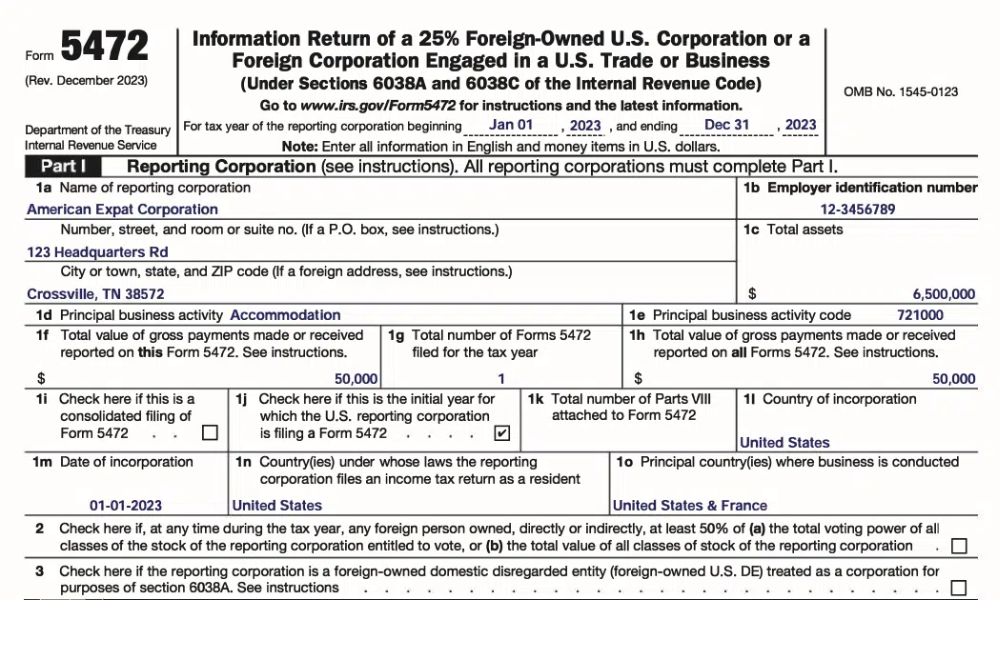
Short answer: if you’ve genuinely relocated your tax residency to Paraguay, a US LLC does not touch what you came here for. Paraguay taxes foreign-source income at 0% under a real territorial system, and its local IRP only reaches income generated inside the country, at 8–10%. One nuance the marketing skips: for personal work, «inside the country» means where the work is done, so what you personally produce from Asunción for clients abroad is Paraguayan-source and falls under the IRP; dividends, interest and the profit of a business run from outside stay at 0%. A US LLC owned by a non-resident is a disregarded entity for US federal tax purposes: no US federal income tax without a physical US presence, but a Form 5472 filing every year regardless (a missed one costs $25,000). The two structures don’t compete: Paraguay is your personal residency flag, the LLC is your dollar-denominated operating and banking layer. What trips people up is not the tax math: it’s confusing migratory residency with tax residency, and tax residency with actually having left your home country. I’ve lived this specific confusion from the inside: I’ve been tax resident in Paraguay for four years.
Why “territorial” means something different here
A lot of jurisdictions market themselves as territorial and then quietly carve the promise back with anti-abuse clauses, passive-income exceptions, or exit taxes that show up the moment you try to leave. Paraguay’s version doesn’t have that fine print. Only Paraguayan-source income is taxed, and Article 48 of Law 6380/2019 defines it as income «from activities carried out in the Republic, from assets located or rights economically used in it». Foreign dividends, a pension from abroad, the profit of a business that operates outside Paraguay: none of it falls inside the Paraguayan tax base. The local personal income tax (IRP) runs an 8–10% scale, and it applies to what you generate inside the country, which for personal services means the work you do while sitting here, whoever the client is.
That distinction matters because a US LLC owned by a foreign resident is already, by IRS design, mostly indifferent to where you personally pay tax: it’s a disregarded entity, transparent for US federal purposes, and the profit flows to you. Paraguay’s territorial rule is what decides whether that flow-through profit gets taxed again once it reaches you personally. Profit from work done outside Paraguay, or distributed to you as owner of a business run from abroad, isn’t; the share that comes from work you do from Paraguay is Paraguayan-source and pays the IRP at 8–10%. Still single digits against a 45–47% marginal rate at home, but plan it as a number, not as zero.
The 120-day myth, actually explained
It gets repeated everywhere (in advisor blog posts, in YouTube videos, in forum threads written by people who have never lived here) that spending 120 days a year in Paraguay makes you a tax resident. It’s false, and conflating it with a completely different rule.
The 120-day figure belongs to administrative domicile, not tax residency. It’s the threshold the DNIT (Paraguay’s tax authority) uses to assign an official address to a taxpayer when the declared one looks unreliable, so notifications have somewhere to land. It is a notification rule. It says nothing about whether you qualify as a tax resident.
Paraguay’s Tax Code does not set a minimum-stay requirement to acquire or keep tax residency. Residency is tied to your actual, effective presence in the country and, in practice, to registering for a RUC (the local taxpayer number) once you generate a Paraguayan taxable event. Someone whose income is entirely foreign-source may not even need to register.
The myth persists because it’s easier to sell than the real answer. “Spend 120 days and you’re done” sounds cleaner than a rule that depends on effective presence and genuine ties. But building your plan on the wrong number is expensive: if you assume 120 days moved you out of your home country’s tax net and it didn’t, the bill arrives years later with interest attached.
The three residency routes, briefly
| Route | What it takes | Timeline | Best for |
|---|---|---|---|
| Standard | Apostilled personal documents, no committed capital | Temporary (2 years) then permanent | Most founders relocating without a Paraguayan investment project |
| SUACE (investment) | ~$70,000 over 10 years in tangible business assets + local employment | 45 days–6 months | Founders who want permanent status immediately and have a real local project |
| Investor Pass (new, 2026) | ~$150,000 investment, terms still settling | Designed to be direct, no temporary phase | Investors prioritising speed and simplicity: confirmed case by case |
The standard route is the default recommendation when there’s no specific reason to accelerate: it’s the cheapest path and fits founders living off foreign-source income, which is most of the people reading this. SUACE trades capital for speed. The Investor Pass is genuinely new: we treat its exact terms as provisional until confirmed on your specific case rather than sell it as if it had a decade of track record behind it.
What actually matters: three different things people lump together
This is where almost everyone gets tripped up, and where honesty matters more than a clean sales pitch. There are three separate things:
- Migratory residency in Paraguay: your legal right to live here, the cédula. It’s what gets processed and what gets marketed, because it’s tangible.
- Tax residency in Paraguay: whether Paraguay actually treats you as its tax resident. Not the same as holding the cédula. It depends on effective presence and your local tax situation, not a document alone.
- Leaving your home country’s tax residency: the hardest of the three, and the only one that actually changes your tax bill. Almost nobody explains this part because it doesn’t sell as easily.
Holding the Paraguayan cédula does not, by itself, take you out of your home country’s tax net. If you’re still tax resident somewhere else (because you spend 183+ days there, because your economic centre of interest is there, or because your spouse and children live there), your worldwide income keeps being taxed there, cédula or not. I see this mistake every year: someone gets the document, keeps living as before, and assumes they’re “out.” They aren’t, and an audit finds it the hard way.
For the flag to actually work, you need to relocate for real and be able to show it: your habitual home, your days, your economic centre, and, where relevant, your family. The good news, at least for founders leaving jurisdictions with blacklist rules, is that a genuine move to Paraguay usually doesn’t trigger the multi-year quarantine that some countries apply to blacklisted destinations, because Paraguay isn’t on most of those lists. But “genuine” is the operative word: there’s no shortcut around it.
Not sure how this applies to your case?
Eleven questions and we tell you whether the LLC fits, and if it does not, that too.
Where the US LLC actually fits
Paraguay resolves your residency flag: where you live and pay personal tax. It doesn’t resolve where you invoice, hold dollars, or get paid by international clients. That’s the LLC’s job.
A foreign-owned single-member LLC is a disregarded entity for US federal tax purposes. Practically, that means:
- No US federal income tax on the LLC’s profit as long as you have no effectively connected income and no physical US presence (office, employees, inventory).
- A Form 5472 filing (with a pro-forma 1120) is mandatory every year regardless of activity level: the penalty for missing it is $25,000.
- States like Wyoming, Delaware and New Mexico charge no state income tax on an LLC with no in-state activity.
None of that changes because you live in Paraguay. What Paraguay changes is what happens once that profit reaches you personally: under the territorial system, foreign-source profit (dividends, interest, a business run from outside) isn’t taxed again locally, and the work you do from Paraguay for international clients pays the IRP at 8–10%. The two pieces are complementary rather than redundant: the LLC gives you dollar banking, Stripe access and a US-recognised counterparty; Paraguay gives you a personal residency that doesn’t reintroduce a tax bill on top of it.
A structure without a residency behind it leaves your home country free to keep claiming that income as yours. A residency without a clean corporate structure makes it harder to invoice and collect from international clients in the first place. The value is in having both pieces actually fit, which is also why residency should get sorted before the corporate piece, not after.
A closing note on your home country
Whatever your country of citizenship, moving to Paraguay doesn’t automatically end its claim on you. Most countries (the UK, Canada, Australia, most of Northern Europe) apply their own tests: days present, habitual home, centre of economic interest, family ties. Some run formal exit procedures; some don’t and simply keep taxing you as a resident until you can demonstrate otherwise. That analysis is jurisdiction-specific and it’s the part we walk through case by case before anything else moves: the LLC and the Paraguayan residency both work far better once that question has an honest answer.
If you’re still working out what determines your tax residency in the first place, or want the LLC side of this (formation, the tax mechanics for non-residents, or US banking once you’re set up), those are the pieces we build once the residency question is settled. If you’re moving an LLC you already opened somewhere else into this structure, switching your LLC is the starting point.
In short
Paraguay’s territorial system is real, not marketing: foreign-source income isn’t taxed, and the local IRP only reaches what you generate inside the country, including the work you do from here for clients abroad, at 8–10%. None of that is undone or complicated by owning a US LLC; if anything, the two are designed to sit side by side. What actually derails people is treating the cédula as the finish line instead of the start: migratory residency, tax residency, and leaving your home country’s tax net are three different things, and only doing all three properly gets you the result you’re actually after. If you want a straight read on where your case stands, that’s what the assessment is for.
Frequently asked questions
Do I have to spend 120 days a year in Paraguay to be a tax resident?
No, that number gets repeated constantly and it is a myth. Paraguay's Tax Code does not set a minimum stay requirement for tax residency. The 120-day threshold belongs to a different question: it is the criterion the DNIT (Paraguay's tax authority) uses to assign an administrative domicile of record when a taxpayer's declared address looks unreliable. It is a notification and localisation rule, not a gate into tax residency.
If I have Paraguayan residency, does my US LLC stop owing anything anywhere?
No. The LLC's US-side position doesn't change based on where you live: as a foreign-owned single-member LLC it is a disregarded entity for US federal tax purposes, it owes no US federal income tax without ECI or a physical US presence, and it still must file Form 5472 with a pro-forma 1120 every year: a missed filing carries a $25,000 penalty. Paraguay's territorial system means the LLC's foreign-source profit is not taxed locally, but the US filing obligation exists independently of your residence.
Does getting the Paraguayan cédula automatically end my tax residency back home?
No, and this is the single most common mistake I see. Paraguayan migratory residency is a document. Your home country stops treating you as a tax resident only when you actually break the ties it looks at (habitual home, days present, where your economic and family life sits) and can show it. Holding a cédula while your real life stays where it was changes nothing fiscally.
Which residency route should I use if I just want to become operational quickly?
For most founders without a Paraguayan investment project, the standard route (a two-year temporary residency converting to permanent) is the default: low cost, no committed capital, and it fits people living mainly off foreign-source income. SUACE, the investment route, trades roughly $70,000 committed over ten years in tangible assets for permanent residency from day one. The Investor Pass is newer and the terms are still settling: we confirm the live requirements before you commit to it.
Is Paraguay on Spain's or other countries' high-tax-risk jurisdiction lists?
Paraguay is not on Spain's list of non-cooperative jurisdictions, so a genuine move here does not trigger Spain's five-year quarantine rule that applies to blacklisted destinations. Other countries run their own lists: if your home country has an equivalent regime, that is one of the first things we check before recommending Paraguay as your residency.
Can Cheq Capital handle both the Paraguayan residency and the LLC?
We coordinate the two pieces so they're designed together rather than bolted on afterward: the residency and migration work runs through our of-counsel legal partners in Paraguay, and the LLC formation, EIN and banking preparation is ours directly. What we won't do is sell you the cédula as a tax result on its own; the residency only does its job once you've actually relocated.