A US LLC for Content Creators
The withholding on your YouTube revenue is a treaty question, not an entity question. Almost every creator arrives here believing the opposite.
A creator business looks like one revenue stream and is usually five. Platform ad revenue, sponsorships, affiliate commissions, memberships and product sales are each treated differently for tax purposes, and the differences are not intuitive. The result is that generic advice, “form a US LLC and it is all handled,” is wrong in a specific and costly way for the largest single line on most creators’ statements.
Let us start with the part people get wrong first.
The rule that actually governs this: the US-source portion of your platform ad revenue is generally treated as royalty income and is subject to withholding. What sets the rate is your tax form and any treaty between the US and your country of residence. A US LLC is not a treaty, and forming one does not change that calculation.
Platform revenue: what actually determines your rate
Platforms that pay creators are required to establish each creator’s tax status and withhold where the rules require it. For ad revenue, the piece treated as US-source is broadly the revenue attributable to viewers in the United States. That amount is treated as a royalty, and royalties paid to non-residents are subject to withholding at a statutory rate unless a treaty reduces it.
Three things decide what you actually pay:
- Whether you submitted tax information at all. Creators who skip it get the least favourable treatment available.
- Whether your country of residence has a treaty with the US covering this income, and at what rate.
- Whether you have a taxpayer identification number valid for claiming that treaty rate.
Note that none of these is “do you have a US LLC.” A US entity does not manufacture a treaty benefit, and in some framings it complicates rather than simplifies the analysis. If your only revenue is platform ad income and you have never submitted your tax information properly, fixing the form is the highest-value thing you can do this month, and it costs nothing.
Where the entity actually earns its keep
For most established creators, ad revenue is not the largest line. Sponsorships, affiliates, products and memberships are. That is where the structure does real work:
- Brand and agency onboarding. US brands and their agencies contract with vendors. An entity name, an EIN, a W-8BEN-E and a US business account move you from exception to standard, which affects both whether the deal closes and how fast you get paid.
- Getting paid on US rails. Sponsorship payments by ACH into a US account, rather than international transfers with a fee on each one. See banking for non-residents.
- Contracting properly. Sponsorship agreements signed by an entity, with defined deliverables and usage rights, instead of a personal PayPal invoice and a DM thread.
- Separating the business. Creator income is volatile and lumpy. Keeping it in a company account, with its own bookkeeping, makes both the tax picture and your own planning legible.
Not sure how this applies to your case?
Eleven questions and we tell you whether the LLC fits, and if it does not, that too.
The contract wording that changes the tax answer
This deserves its own section because creators sign these agreements quickly and the language has consequences.
A sponsorship framed as a fee for services (you produce a video, you are paid for producing it) is generally sourced where you perform the work, which for a creator based outside the US is outside the US.
The same deal framed as a licence of your content, your likeness or usage rights can be characterised as a royalty, and royalties are sourced by where the intangible is used. That can pull a payment into US-source treatment, with withholding attached, on a deal you assumed was clean.
Neither framing is wrong; they are different commercial arrangements. The mistake is signing one while believing you signed the other.How a specific agreement is characterised depends on its actual terms and the applicable treaty article, and should be reviewed by a tax adviser before signing at any material size.Background on the framework is in tax for non-resident LLC owners.
What it does not do
It does not reduce or eliminate platform withholding. It does not make you tax resident anywhere. It does not remove the tax owed in your country of residence on your profit: if you live somewhere that taxes worldwide income, that is where your real bill is. It does not shield you from content-level liability: defamation, copyright and disclosure rules attach to what you publish.
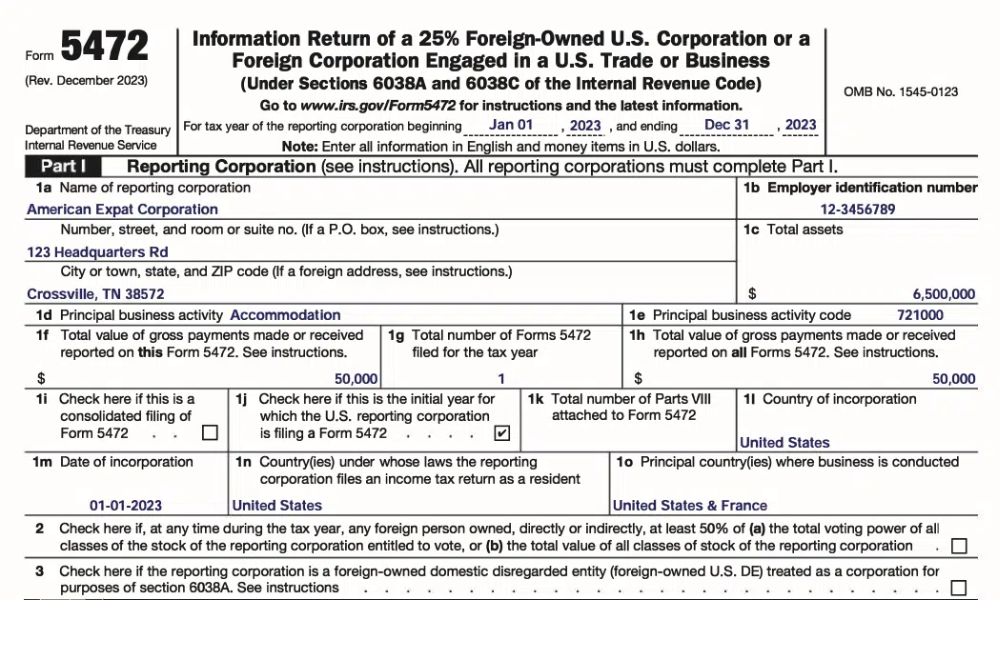
And it brings its own annual obligations: Form 5472 plus a pro-forma 1120, $25,000 penalty for missing it, plus a registered agent and state filings where they apply.
Getting paid: the rails, and why they are the actual problem
The tax question gets all the attention. The thing that sends creators looking for a structure is almost always payment friction, and it is worth naming the specific failures.
Platform payout thresholds and supported countries. Ad networks and platforms pay into a limited set of countries and rails. Creators in countries with thin support wait longer, pay more in conversion, or cannot receive payouts at all in their preferred currency. This is the single most common trigger for forming an entity, and it is a legitimate one.
Brand payments are the harder half. A brand’s accounts payable team is set up to pay vendors with an invoice, an entity, tax documentation and a bank account. A creator with a personal account in a country their system does not recognise becomes an exception, and exceptions get paid last. Creators routinely wait sixty or ninety days for deals they delivered on time.
Agencies sit in the middle and slow it further. Many brand deals arrive through an intermediary agency with its own payment cycle stacked on top of the brand’s. Net 60 from the brand plus the agency’s own terms is a real cash flow shape you should price for.
Conversion costs are invisible until you add them up. Money arriving in dollars, converted at a platform’s rate, into a currency you spend, loses a percentage every time. Over a year of monthly payouts it is a meaningful number, and it is the one creators most often never measure.
The structural answer is not exotic: an entity with an EIN, a dollar account, an invoice a procurement system recognises and correct tax documentation removes most of this. That is what the LLC is genuinely for here, and it is a much better reason to form one than a withholding rate.
When the channel becomes a team
The point at which a creator business stops being a personal brand and starts being a company, and it usually arrives without being noticed.
You hire an editor. Then a thumbnail designer, a researcher, a manager. At some point you are running an operation with recurring payroll-shaped costs, and several structural questions arrive at once.
Who owns the content? If an editor in one country and a designer in another contributed to work that a brand licensed, the assignment chain needs to exist on paper. This is invisible until someone buys the business or a dispute arises, at which point it is the first thing examined.
Contractor or employee, again. The same test as any other business, decided by the substance of the relationship and by the law where the person lives. A full-time editor who works only for you, on your schedule, with your tools, may not be a contractor in their country’s eyes regardless of what the agreement says.
The channel itself is an asset with an owner. A channel in your personal name, monetised through an entity, staffed by contractors, with brand contracts signed inconsistently between the two, is a structure that works fine right up until it is examined.
Fixed costs change the calculation. A solo creator can pause. A creator with three people depending on monthly invoices cannot, which changes how much reserve the business needs and how seriously the annual obligations should be budgeted.
This is the transition where the entity stops being optional-but-useful and starts being the thing holding the business together. It is also where creators most often need advice rather than a checkout, which is the honest reason this page exists.
Your income is four different things wearing one label
“Creator income” is a category invented by creators, not by tax authorities. Underneath it sit at least four kinds of income with genuinely different treatment, and the mistake that costs money is managing them as one.
Platform ad revenue. Paid by the platform under its own terms, with withholding driven by your tax documentation and treaty position. This is the bucket most people mean when they ask about US withholding, and it is the one where a correctly filed treaty claim makes an immediate, visible difference to the amount that lands.
Sponsorship and brand deals. A service contract. You are supplying advertising services to a company, and the treatment follows ordinary services rules, including where the services are performed, which for a creator is generally wherever you sit when you make the content. This is the bucket where invoicing through an entity matters most commercially, because brands and their agencies onboard vendors, not individuals.
Licensing and royalties. Someone pays for the right to use your work. This is characterised differently from services in most treaties, often with its own withholding rate, and the difference between “I made a video for them” and “they licensed my footage” is not cosmetic.
Direct audience revenue. Memberships, merchandise, digital products, tips. This is a consumer sales business with the same VAT and chargeback questions as any other, and it is usually the fastest-growing part of a mature creator business.
The practical point: a single entity can hold all four, but they do not all behave the same way, and the paperwork that optimises one does nothing for another. A perfect treaty claim on ad revenue does not touch your obligations on merchandise sales.
Contracts, deliverables and what you are actually selling
Since the characterisation drives the treatment, the contract wording is not an afterthought. A few patterns worth recognising.
A deliverable versus a licence. “I will produce and publish three videos featuring your product” is a services engagement. “You may use this footage in your paid advertising for twelve months” is a licence. Many brand deals are quietly both, and if the contract does not separate them, someone else will decide how to characterise the whole thing later.
Perpetual usage rights are worth pricing. A brand asking for unlimited, perpetual use of content across all channels is asking for something materially more valuable than a sponsored post. Creators give this away routinely because the contract presents it as boilerplate.
Exclusivity has a shape. A clause preventing you from working with competitors for six months is a real commercial constraint that should be priced and time-boxed, not accepted as standard.
The entity should be the contracting party. Once the LLC exists, contracts, invoices and payments should all name it consistently. Signing personally while invoicing through the company is the inconsistency that undermines both the liability separation and the tax position you built.
None of this requires a lawyer for every deal. It requires reading the clause about usage rights before signing, which most creators do not.
Platform dependency is a structural risk, not just a business one
Worth naming because it changes what the structure is for.
A creator whose revenue is ninety percent one platform has a single point of failure that no entity protects against. Demonetisation, an algorithm change, a policy update, or an account issue with no human to appeal to can remove most of the income in a week, and the annual obligations continue regardless.
The structural implications are unglamorous. Keep a reserve that covers the fixed costs for a year, because the registered agent, the state filing and the Form 5472 are owed whether or not the channel is monetised. Get your direct audience revenue onto rails you control, because it is the part nobody can switch off. And do not build a structure sized for your best year: the compliance load is annual and the revenue is not.
This is also the honest reason we tell some creators to wait. If the entire business is one platform and the revenue is early, the entity adds fixed cost against income that may not persist. That is a reason to revisit in twelve months, not a reason never to do it.
When we tell creators to wait
Your revenue is almost entirely platform ad income. Fix your tax form and treaty position first. That is free, it has a direct effect on your rate, and an entity does not substitute for it.
You are under roughly $20,000–25,000 a year. The fixed cost of a US structure is real, and creator income is volatile. Below that band the case needs to be specific (a sponsor that will not contract with an individual, a product line that needs a processor) rather than aspirational.
Your audience and your sponsors are all domestic. A US entity adds foreign filings for benefits your commercial reality cannot use.
The assessment asks what you actually earn from, where you live and where your customers are, and gives you the reasoning on screen without asking for your email. If the answer is that your bottleneck is a tax form rather than a structure, it will say so, which is not what a checkout page is designed to tell you. If it does fit, what we build and what it costs are published.
Frequently asked questions
YouTube withheld tax on my US views. Does forming a US LLC stop that?
Not by itself, and it is important to understand why. Google is required to withhold on the US-source portion of a creator's earnings: broadly, revenue from viewers in the United States, treated as royalty income. The rate applied depends on the tax information you submit and, critically, on whether a tax treaty between the US and your country of residence provides a reduced rate. Forming a US LLC does not create a treaty entitlement, and it does not by itself remove withholding. Submitting the correct tax form with a valid taxpayer identification number, and claiming any treaty rate you are genuinely entitled to, is what changes the number.
Treaty rates on royalties differ by country and by income article; confirm the applicable rate and the form required for your residency with a tax adviser rather than assuming a standard figure.
Then why would a creator form a US LLC at all?
For the parts of a creator business that are not platform ad revenue, which for most established creators is where the money actually is. Sponsorships, brand deals, affiliate income, product sales, memberships and licensing all involve contracting with companies, invoicing them and getting paid. That is where an entity, an EIN and a US business account remove friction, particularly with US brands and agencies whose vendor onboarding is built around entities rather than individuals.
Sponsors ask for a W-9. I am not a US person. What do I send them?
A W-8BEN-E if you are contracting through a foreign-owned entity, or a W-8BEN as an individual, never a W-9, which is for US persons. The form is what tells the payer how to treat you for withholding. Sending the wrong one, or none, tends to result in either a stalled payment or withholding applied at a default rate that is higher than what you should be paying. This is unglamorous paperwork that has a direct effect on what actually lands in your account.
Is my sponsorship income US-source because the brand is American?
Not automatically, and the distinction is worth getting right. For personal services, the general principle is that income is sourced where the services are performed. A creator filming, editing and publishing from outside the United States is generally not performing services in the US, however American the sponsor is. Where it gets more complex is when the agreement is structured as a licence of content or of your name and likeness rather than as a services fee: licensing can be characterised as royalties, which are sourced differently. The wording of the contract matters more than creators expect.
Does the LLC help if my content itself creates legal risk?
It helps with the business layer, not with the content layer. An entity operated as a genuine company can separate business liability from your personal assets. It does not change defamation, copyright or advertising-disclosure exposure, all of which attach to what you publish and how you disclose it. For creators, contracts with brands, clear disclosure practice and media liability insurance do work no entity structure can do.